Citation Needed?

A recent post by BF ended with the following:
If a dying academy historically relies on professionalization and institutionalization, we will opt for a less professional approach, one that de-professionalizes this approach in service of a more open and accessible conversation.
This immediately made me wonder about how we can get away with de-professionalizing. It seems that we have all worked hard to essentially absorb academic knowledge so that it becomes part of us. This thought reminded me of Ursula Le Guin's diagrams of communication. She suggested that most of us think of conversations as a simple transfer of bits shown below.
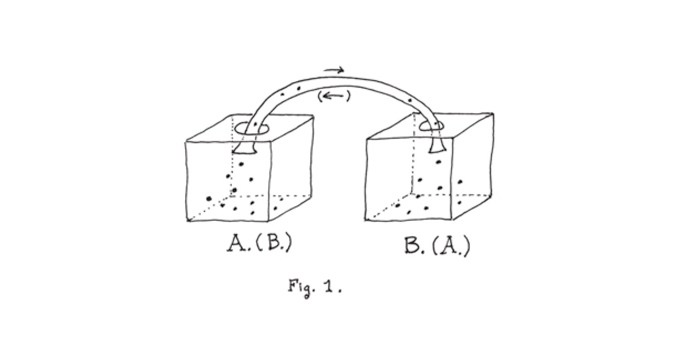
But real conversations change you:
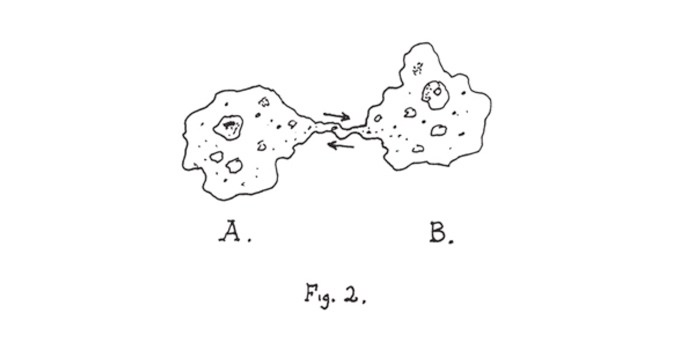
Closer to the way amoeba occasionally intermingle, exchange DNA and then become something new.
This echoes some of my thoughts on expertise. We generally treat expertise as pure information storing, we are vessels for bits of information. But if we do our jobs correctly, we are actually altered by the accumulation of knowledge and eventually embody the academic knowledge in an intuitive (non-obvious) manner. We are therefore ultimately free to explore more since our "inner compass" allows us to navigate effectively without having to provide constant references to ensure we are on sure footing. Miles Davis studied at the Juilliard School but he doesn't sound like he did. That's internalized knowledge. You learn the rules so that you can break them.
And breaking the rules for us means lowering the walls between disciplines and de-siloing knowledge. This only works because we did get siloed and know what that isolation looks like.
Since we are breaking down walls our activities might look like haphazard discussions. We are now not only looking at our own compasses but those of our fellow travelers from other disciplines. Therefore, trust is necessary. That might seem worrying. However, when was the last time you really dug into all of the references? Or did you just assume that a statement was true because it had the aesthetic of a true citation such as "everything sucks, Sartre (2013)". Did you assume something was true because someone wrote a book about it? By the way, Sartre died in 1980. So, we are already "trusting" experts and their compasses. What is a citation then? What is its function?
So maybe the answer to the question "Citation needed?" is no. The problem is that without citations it is hard to tell who actually has a "real" compass. And the interesting question is then: does a faulty compass generate new directions for exploration? Or is it the real compass?